

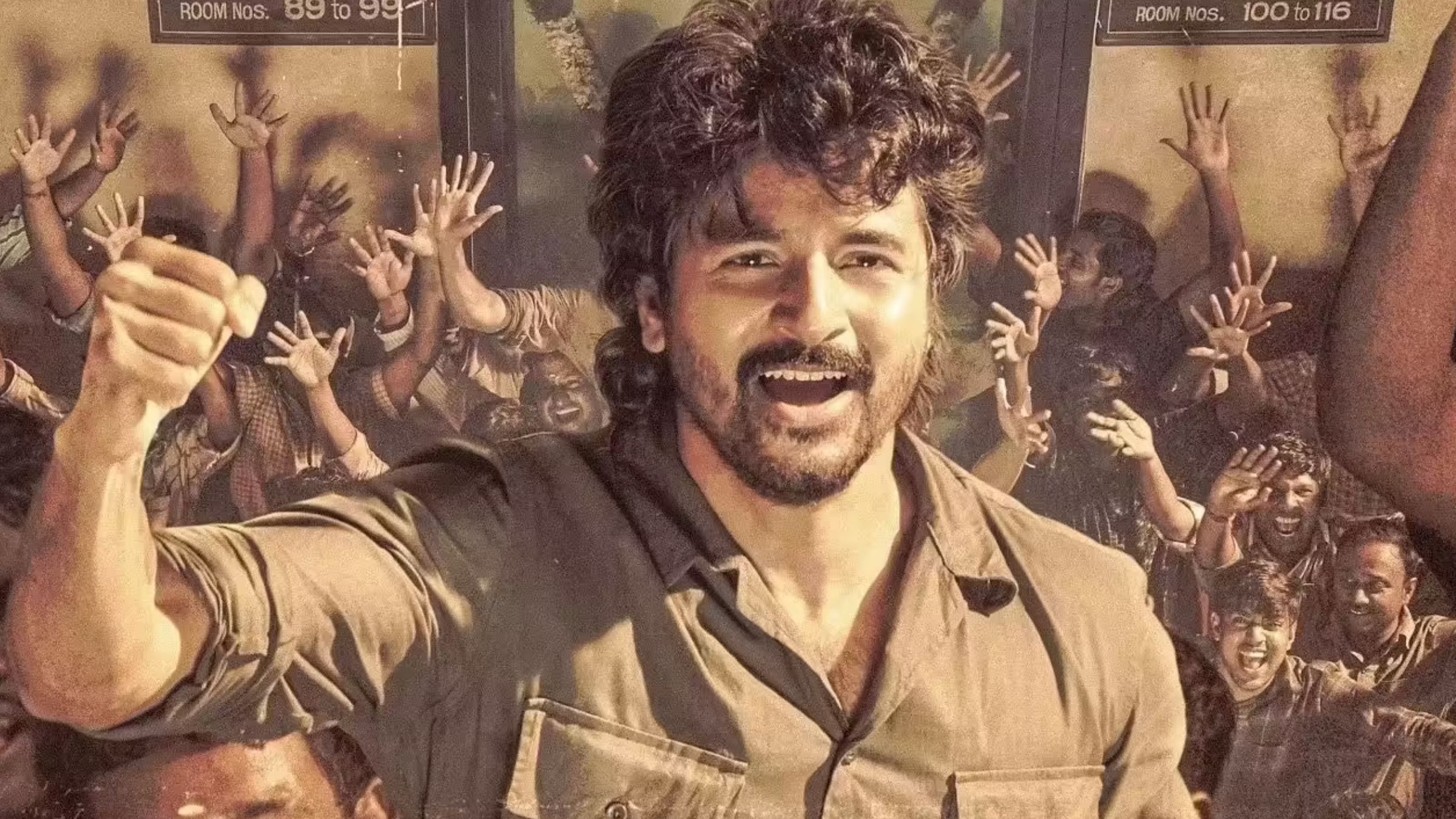
In the grand tapestry of Indian cinema, there are movies that entertain, movies that inspire, and then there is Parasakthi.
If you grew up in a Tamil household, the name “Parasakthi” isn’t just a movie title; it’s a cultural shorthand for rebellion, linguistic pride, and the birth of a legend. When it first hit screens on Deepavali in 1952, it didn’t just break box office records—it broke the status quo. Now, as we stand in 2026, looking back at its legacy and its recent cinematic revival, it’s clear that the fire lit by this film seventy years ago hasn’t lost an ounce of its heat.
This isn’t just a review. This is an exploration of how a single film shaped a state’s identity, launched the career of the “Acting Lion” Sivaji Ganesan, and why its message of social justice is more relevant today than ever before.
READ MORE : https://digitalmohit.co.in/category/movie/
The 1952 Earthquake: Art as a Weapon
To understand why Parasakthi matters, you have to understand the era it was born into. Post-independence India was a land of hope but also deep-seated inequality. The Tamil film industry was dominated by mythological dramas—stories of kings and gods that, while beautiful, felt disconnected from the hunger and struggles of the common man.
Then came the duo that would change everything: M. Karunanidhi and Sivaji Ganesan.
Karunanidhi, a fiery young playwright and future Chief Minister, used his pen like a scalpel. He didn’t write “dialogue”; he wrote manifestos. When a young, unknown actor named V.C. Ganesan (later “Sivaji”) stepped onto the screen as Gunasekaran, he didn’t just speak; he roared.
READ MORE : https://digitalmohit.co.in/category/news/
The Plot: A Family Broken by Fate
The story follows three brothers—Chandrasekaran, Gnanasekaran, and Gunasekaran—who are separated from their sister, Kalyani, due to the chaos of World War II and the Japanese occupation of Burma. When Gunasekaran returns to India, he expects a warm welcome. Instead, he finds a society that has turned its back on his family. His father is dead, his sister is a destitute widow being harassed by predators, and the institutions meant to protect the poor—the law and the church—are the very things exploiting them.
The Courtroom Scene: A Masterclass in Rationalism
If you ask any Tamil cinema buff about Parasakthi, they will inevitably point to the courtroom climax. It is perhaps the most iconic ten minutes in the history of the medium.
In this scene, Gunasekaran is on trial for his life. Instead of begging for mercy, he turns the trial into a scathing indictment of society. He questions why a woman (his sister) is forced to kill her own child out of hunger. He questions why the wealthy hoard grain while the poor starve.
Most controversially for the time, he attacked the hypocrisy of religious institutions. His famous line, “I didn’t say there shouldn’t be a temple; I said the temple shouldn’t be a den for scoundrels,” became a rallying cry for the Rationalist movement in Tamil Nadu. It was a bold, dangerous, and electrifying moment that moved the audience from being mere spectators to being participants in a social revolution.
The Human Element: Grief, Loss, and Survival
While Parasakthi is often remembered for its politics, its true power lies in its humanity. It is a story about the bonds of family and the sheer will to survive in a world that wants you to disappear.
The character of Kalyani, played by the legendary Pandari Bai, is the emotional anchor of the film. Her journey is a harrowing look at the plight of widows and women in the 1950s. She isn’t just a victim; she is a symbol of a society that has lost its moral compass. When we watch her struggle, we aren’t just watching a drama—we are seeing the systemic failure of a community to care for its own.
This humanization is what makes the film stay with you. You don’t just remember the big speeches; you remember the look of despair on Gunasekaran’s face when he realizes he cannot even afford a meal for his starving sister.
Parasakthi in 2026: The Legacy Reimagined
Fast forward to the present day. In 2026, we’ve seen a massive resurgence in political cinema. With the recent high-budget remakes and digital restorations, a new generation is discovering Parasakthi.
Modern directors like Sudha Kongara and Pa. Ranjith have cited the film as a primary influence. In an era of “Pan-Indian” cinema where spectacle often trumps substance, Parasakthi serves as a North Star. It reminds filmmakers that you don’t need CGI to be powerful; you need a point of view.
Why is it trending again?
- Linguistic Pride: With ongoing debates about regional languages versus national uniformity, Gunasekaran’s pride in his Tamil identity resonates deeply with Gen Z and Millennials.
- Social Justice: The themes of caste discrimination and economic disparity addressed in 1952 haven’t vanished; they’ve simply evolved.
- The “Sivaji” Aura: In a world of understated “natural” acting, there is something incredibly refreshing about the raw, operatic power of Sivaji Ganesan’s performance. He taught us that acting is about soul, not just subtlety.
The Technical Brilliance: Beyond the Script
We often overlook the technical achievements of the original film. For 1952, the cinematography and editing were remarkably forward-thinking.
- Shadow and Light: The film used chiaroscuro lighting to highlight the moral ambiguity of its characters.
- The Score: The music didn’t just provide a background; it acted as a heartbeat, heightening the tension of the chase scenes and the sorrow of the reunions.
- The Language: The use of “Classical Tamil” (Senthamizh) in the dialogues gave the film a rhythmic, almost musical quality that made the long monologues feel like poetry.
The Verdict: Why You Must Watch It (Again)
Whether you are watching the 1952 classic on a restored 4K stream or catching a theatrical re-release, Parasakthi demands your full attention.
It is a rare piece of art that manages to be a time capsule of the past and a blueprint for the future. It teaches us that cinema has the power to topple governments, change laws, and, most importantly, change minds. It tells us that being an “outsider” like Gunasekaran isn’t a weakness—it’s a vantage point from which you can see the truth.
As we navigate the complexities of 2026, let’s look back at the courage of the team that made this film. They risked censorship, social exile, and financial ruin to tell a story they believed in.
Parasakthi isn’t just a movie. It is the sound of a people finding their voice.
Let’s Keep the Conversation Going
The beauty of a film like Parasakthi is that everyone sees something different in it. For some, it’s a political thriller; for others, it’s a family tragedy.
What is your favorite moment from the film? Do you think the 1952 dialogues still hold weight in today’s political climate?
If you enjoyed this deep dive into the roots of Tamil cinema, I can also create a comparison guide between the original Parasakthi and the modern political dramas it inspired, or perhaps a biographical look at how this film transformed Sivaji Ganesan into the “Nadigar Thilagam.” Would you like me to do that?













Leave a Reply